Mike Meetz and Sam Wormley team up to provide a lively
discussion with OLLI members about science in the news. A
deep understanding of science is not required to share and
discuss recent Science in the News. Previous Classes.
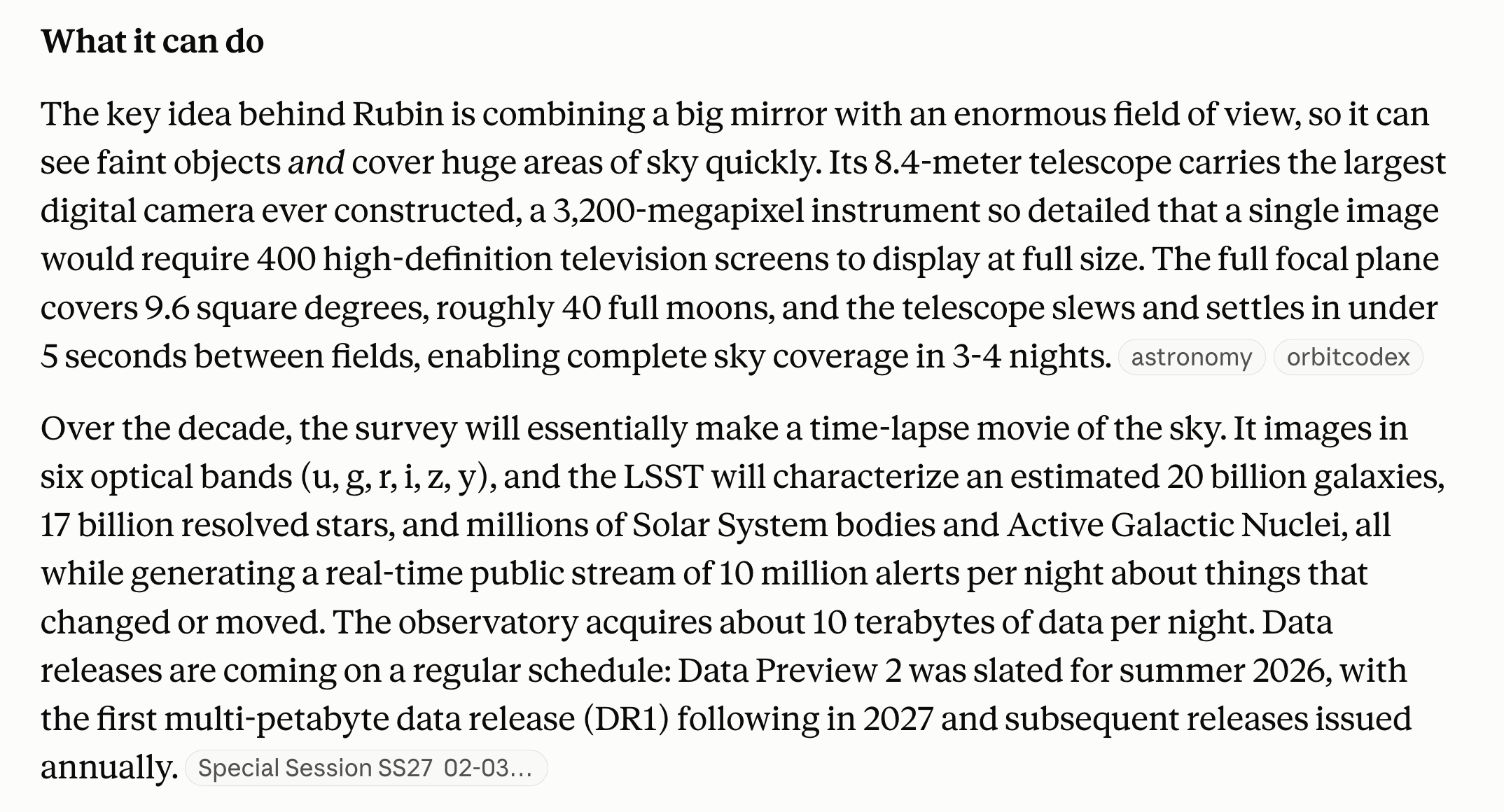
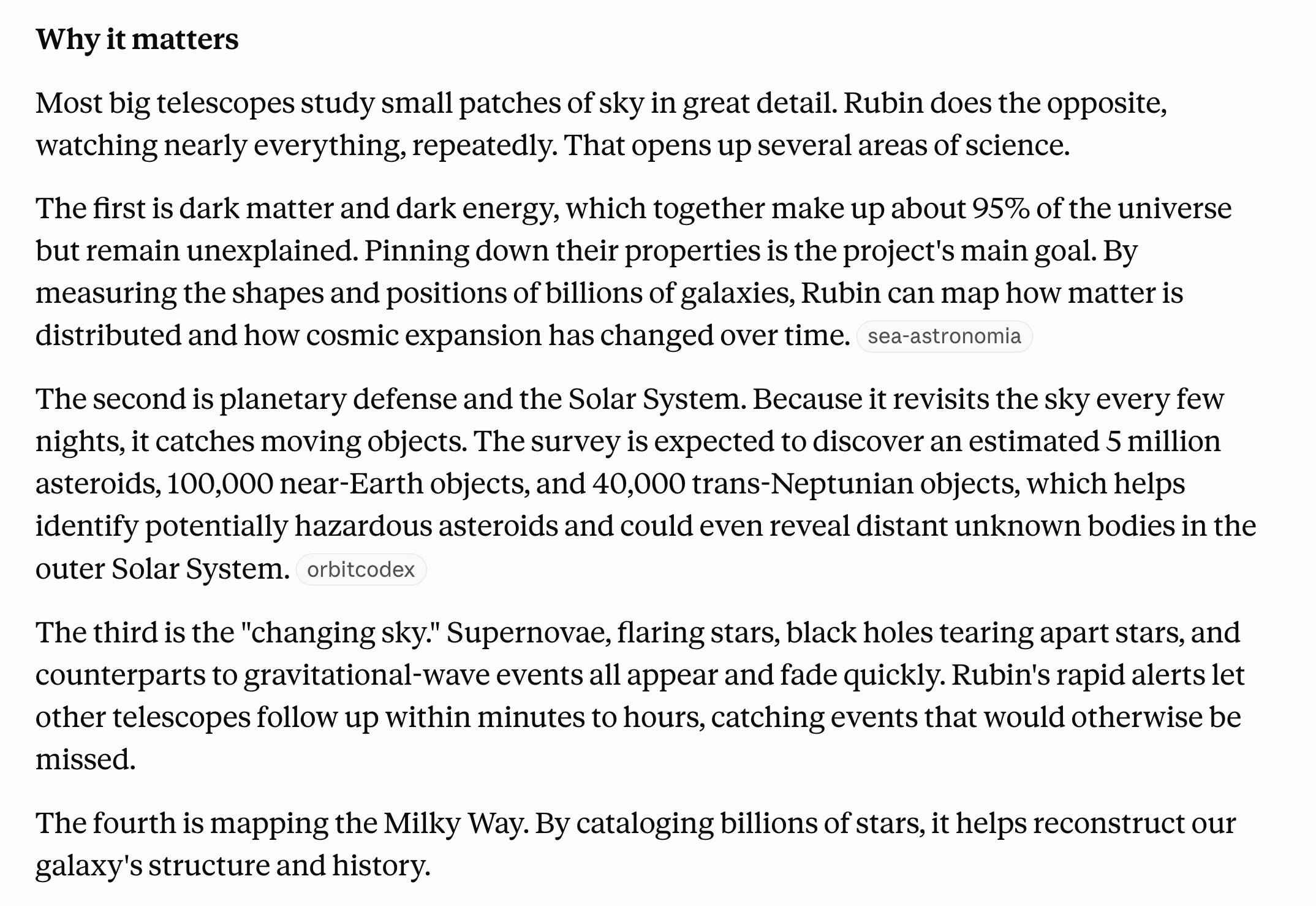
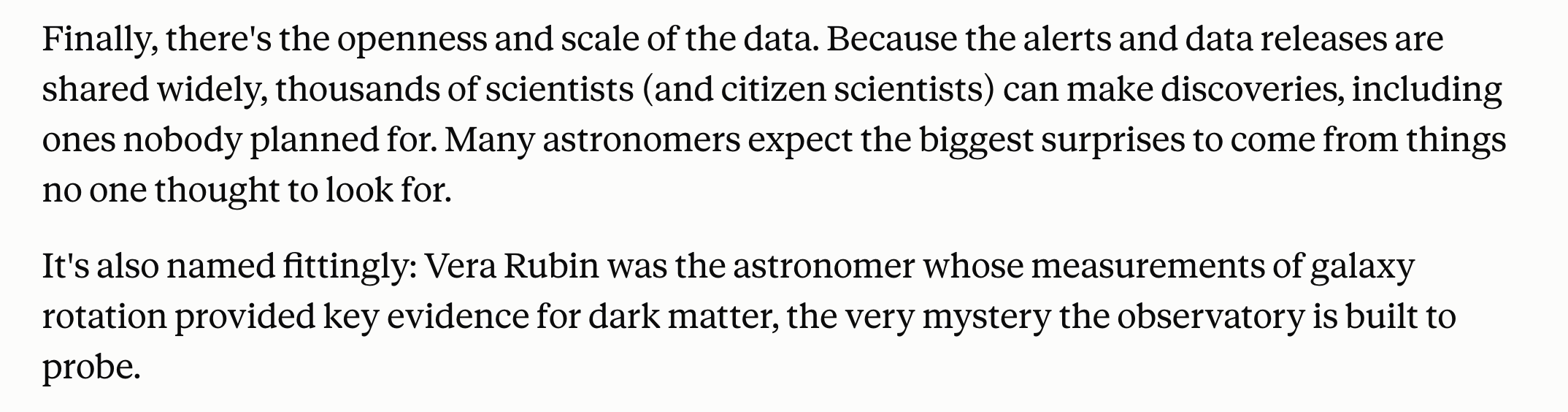
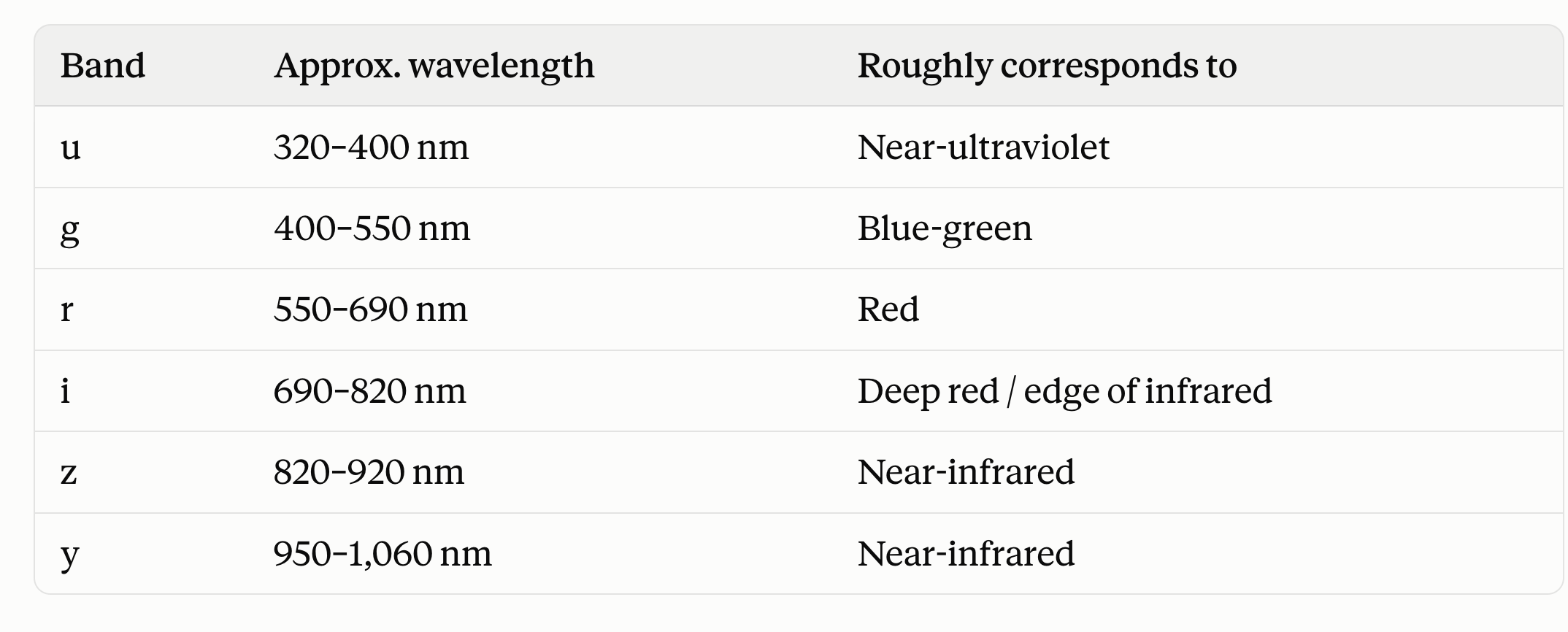
⓵ Vera Rubin Observatory LSST (Legacy Survey of Space and Time)
https://rubinobservatory.org
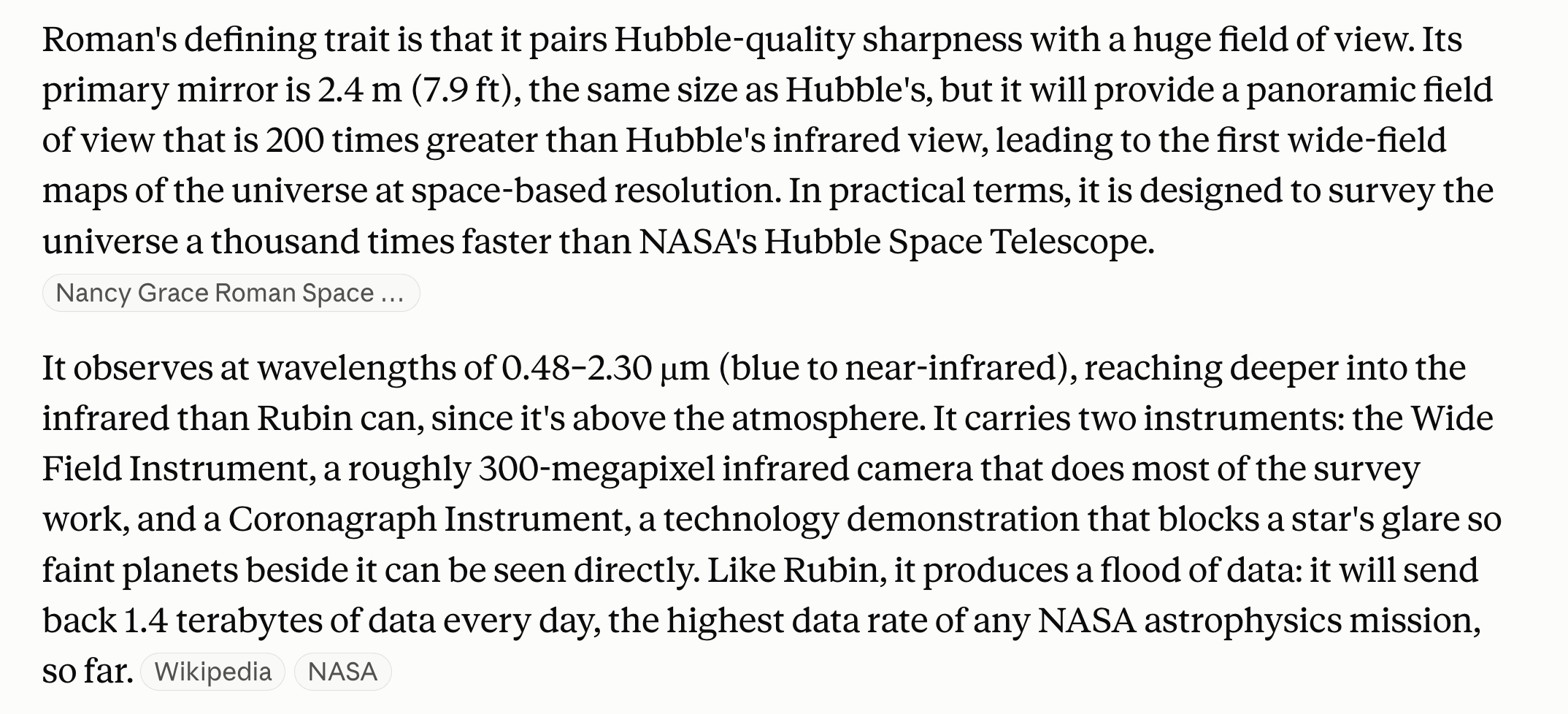
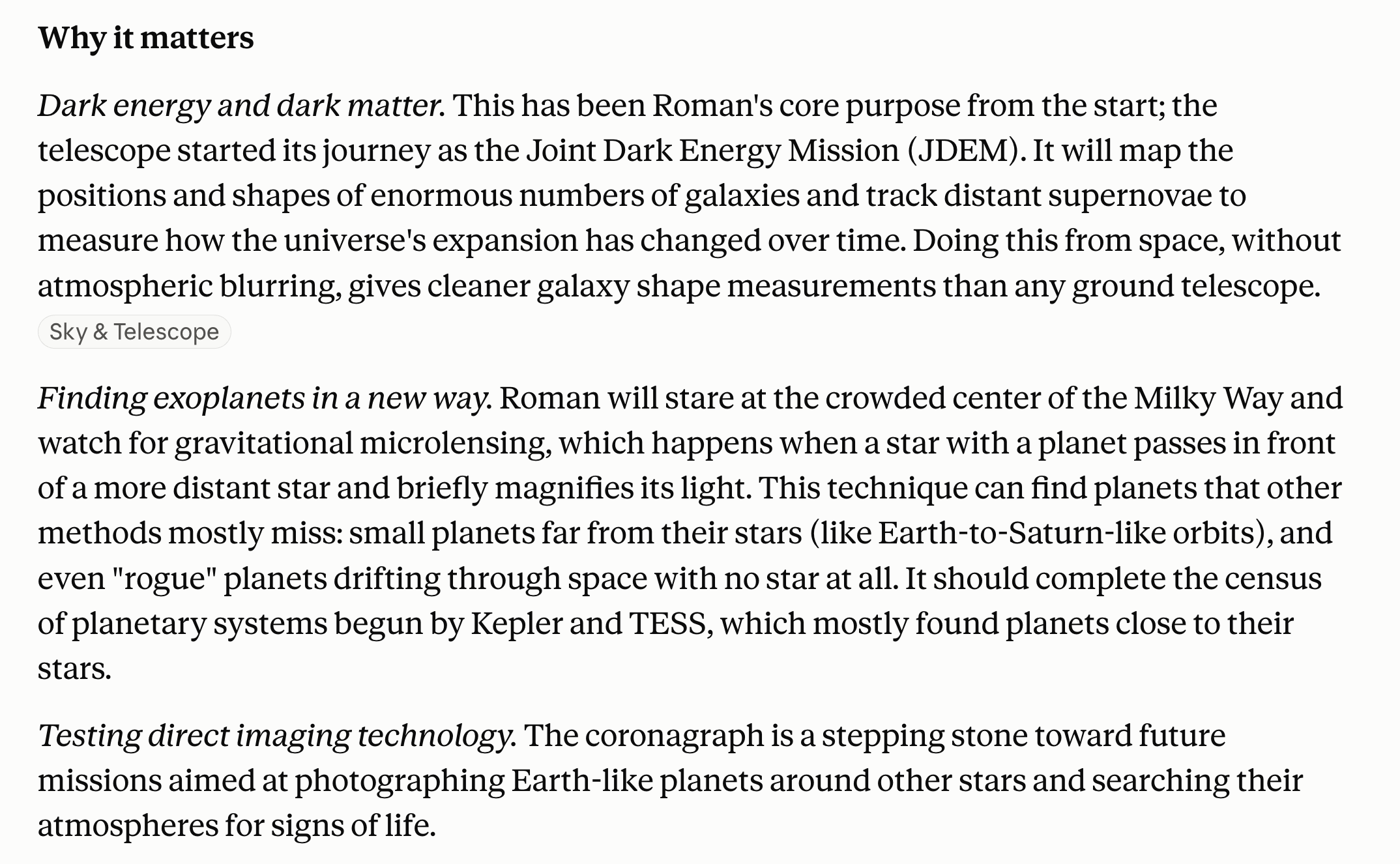
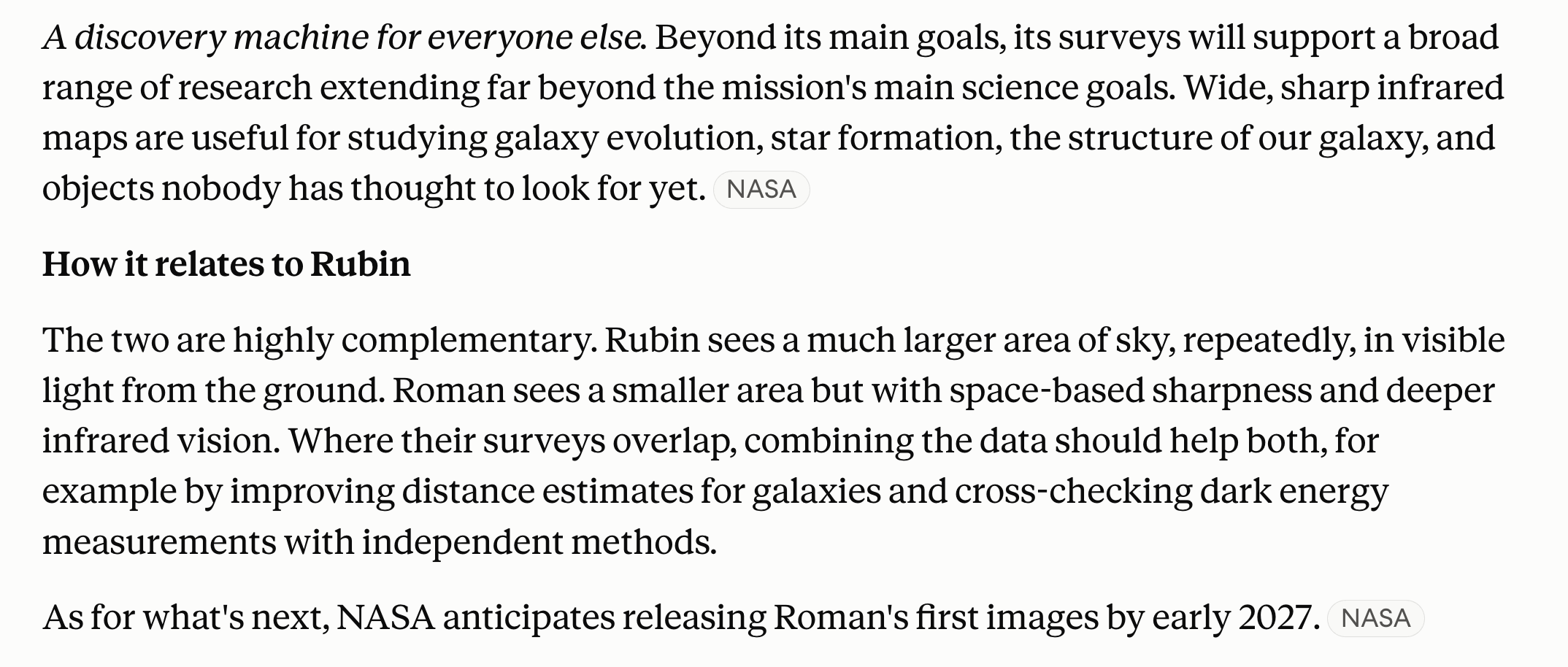
 ⓶ Nancy Grace Roman Space Telescope (pointing up instead of down)
https://science.nasa.gov/mission/roman-space-telescope/
NASA Planned for 10 Years. The Roman Space Telescope May Keep Going for 22
https://scitechdaily.com/nasa-planned-for-10-years-the-roman-space-telescope-may-keep-going-for-22/
⓶ Nancy Grace Roman Space Telescope (pointing up instead of down)
https://science.nasa.gov/mission/roman-space-telescope/
NASA Planned for 10 Years. The Roman Space Telescope May Keep Going for 22
https://scitechdaily.com/nasa-planned-for-10-years-the-roman-space-telescope-may-keep-going-for-22/
 ⓷ How to stay smart in the age of Al: the science of critical thinking I Nature
https://www.nature.com/articles/d41586930-6
There is growing concern that using Al can blunt memory and
reasoning. The evidence so far is limited, but in general,
friction is your friend: learning requires effortful
cognitive processing, experts say. Thankfully, researchers
are developing strategies to keep our brains nice and
wrinkly. One technique, metacognition - the ability to think
about, plan and monitor your own learning - can add an
average eight extra months of student progress in school
over a year, compared with students who are not taught
⓸ Every Breath Leaves a Unique Signature in Your Brain, Study Finds
https://scitechdaily.com/every-breath-leaves-a-unique-signature-in-your-brain-study-finds/
A UC San Diego study reveals a precise link between
breathing and brain activity that could improve
understanding of disorders in which breathing becomes
dangerously disrupted.
Breathing is often measured in simple terms, such as how
many breaths a person takes per minute. But new research
suggests that this misses something important: the detailed
shape of each breath is closely associated with the shape of
neural activity in the brain.
Researchers led by the University of California San Diego
found that subtle differences from one breath to the next
correspond with changes in electrical activity across brain
regions involved in cognition, emotion, and memory.
Variations such as a longer inhale, slower exhale, or brief
pause were reflected in the pattern of neural activity.
“Every single breath is different,” said the paper’s first
author Eena Kosik-Rose, a PhD student in the UC San Diego
School of Social Sciences’ Department of Cognitive Science.
“You can pause your breathing for several seconds, take a
super deep breath, or have a shallow exhale. What we’re
showing is that those differences in the shape of each
breath are reflected in the shape of brain activity.”
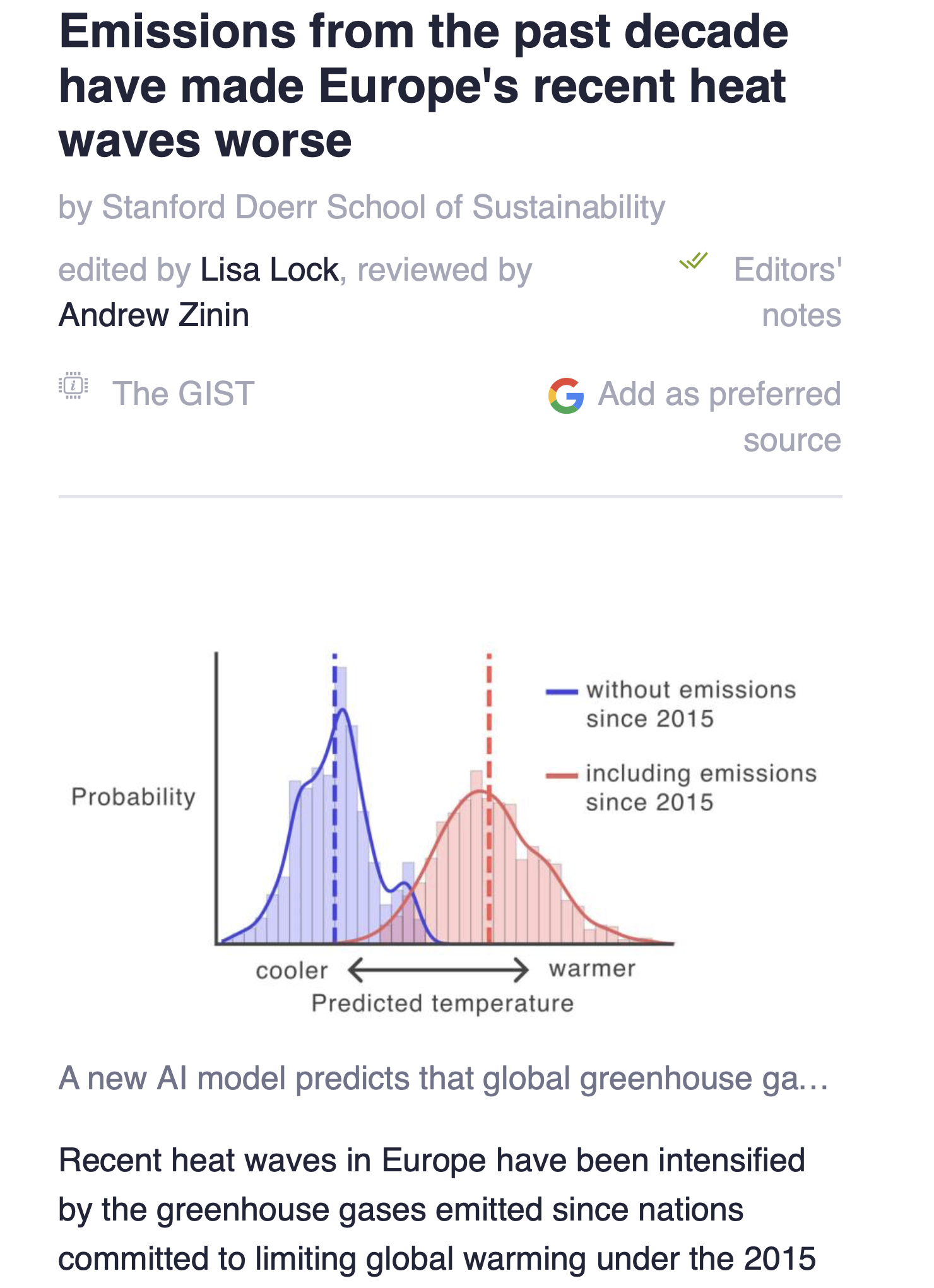
⓹ Emissions from the past decade have made Europe's recent heat waves worse
https://phys.org/news/2026-09-emissions-decade-europe-worse.html
⓷ How to stay smart in the age of Al: the science of critical thinking I Nature
https://www.nature.com/articles/d41586930-6
There is growing concern that using Al can blunt memory and
reasoning. The evidence so far is limited, but in general,
friction is your friend: learning requires effortful
cognitive processing, experts say. Thankfully, researchers
are developing strategies to keep our brains nice and
wrinkly. One technique, metacognition - the ability to think
about, plan and monitor your own learning - can add an
average eight extra months of student progress in school
over a year, compared with students who are not taught
⓸ Every Breath Leaves a Unique Signature in Your Brain, Study Finds
https://scitechdaily.com/every-breath-leaves-a-unique-signature-in-your-brain-study-finds/
A UC San Diego study reveals a precise link between
breathing and brain activity that could improve
understanding of disorders in which breathing becomes
dangerously disrupted.
Breathing is often measured in simple terms, such as how
many breaths a person takes per minute. But new research
suggests that this misses something important: the detailed
shape of each breath is closely associated with the shape of
neural activity in the brain.
Researchers led by the University of California San Diego
found that subtle differences from one breath to the next
correspond with changes in electrical activity across brain
regions involved in cognition, emotion, and memory.
Variations such as a longer inhale, slower exhale, or brief
pause were reflected in the pattern of neural activity.
“Every single breath is different,” said the paper’s first
author Eena Kosik-Rose, a PhD student in the UC San Diego
School of Social Sciences’ Department of Cognitive Science.
“You can pause your breathing for several seconds, take a
super deep breath, or have a shallow exhale. What we’re
showing is that those differences in the shape of each
breath are reflected in the shape of brain activity.”
⓹ Emissions from the past decade have made Europe's recent heat waves worse
https://phys.org/news/2026-09-emissions-decade-europe-worse.html
 ⓺ Newly created viruses are a warning. We still have a window to stop Al-enabled bioweapons - Bulletin of the Atomic Scientists
"Nature is the world's worst bioterrorist" is a common maxim
in the field of biosecurity, a reference to the idea that
naturally emerging pathogens cause far more deaths than any
biological attack a terrorist could carry out. But the trope
may soon be outdated. In an article published Aug. 6 in the
journal Science, scientists demonstrated that trained AI
models can design novel viruses as well as -if not better
than - nature itself.
Their experiment created viruses that infect bacteria, not
humans. Still, much like the multiple AI models that escaped
their test environments to hack other networks this summer,
these newly revealed capabilities give biosecurity experts
like me pause. How do we keep enabling legitimate scientific
progress, while also preventing AI from assisting in the
creation of biological weapons?
As AI capabilities advance, viral bioweapons could become
much easier to design and produce and could cause even more
harm than the weapons used in the past. Consider that almost
all the bioterrorist attacks in our modern era have involved
substances like anthrax or ricin. While they've harmed
dozens of people at a time, the illnesses these attacks
caused weren't transmissible between humans. Designing novel
viruses, on the other hand, could enable biological attacks
that spread, infections that leap from person to person and
that could even spark a pandemic. To prevent this outcome,
we need to build mechanisms for restricting access to the
tools, data, and materials that might allow someone to
misuse emerging capabilities in this way. And we should also
go further by building defenses that can deter nefarious
activity in the first place.
https://thebulletin.org/2026/09/newly-created-viruses-are-a-warning-we-still-have-a-window-to-stop-ai-enabled-bioweapons/
⓻ Wild Experiment Reveals Quantum Objects Do Obey Gravity: ScienceAlert
Summary
Physicists have provided the first direct experimental
evidence that the equivalence principle, a cornerstone of
general relativity, affects quantum objects. Using a Quantum
Galileo Interferometer, researchers manipulated a
Bose-Einstein condensate of rubidium atoms, demonstrating
that the equivalence principle holds true in the quantum
realm. This discovery paves the way for further exploration
of the relationship between quantum mechanics and gravity.
https://www.sciencealert.com/wild-experiment-reveals-quantum-objects-do-obey-gravity.
⓼ Cognition and consciousness arise from analog computations, says new theory - MIT News | Massachusetts Institute of Technology
Summary
A new theory published in The Journal of Neuroscience
suggests that the brain uses traveling waves of rhythmic
neural activity to coordinate neural networks and perform
analog computations. This theory posits that brain waves,
particularly alpha/beta waves, organize neural ensembles and
enable spatiotemporal computing, allowing for efficient
information processing and potentially influencing
consciousness. The theory highlights the importance of wave
dynamics in cognition and suggests that manipulating brain
waves could be a promising avenue for clinical treatments.
https://news.mit.edu/2026/cognition-consciousness-arise-from-analog-computations-says-new-theory-0901
⓽ Is This A Sign of Dark Matter?
The most sensitive dark matter detector ever built has
recorded a single collision that physicists cannot explain.
The collision occurred one day in June 2023. Nearly a mile
beneath South Dakota, inside a tank called LUX-ZEPLIN (LZ)
filled with ten metric tons of liquid xenon, a single xenon
nucleus took a hard hit and recoiled, giving off a faint
flash. Nothing physicists know about should have hit it that
hard.
Dark matter, an invisible substance nobody has ever directly
observed despite decades of searching, accounts for roughly
85 percent of the matter in the universe. We know it is
there from its gravitational pull: galaxies spin as though
far more matter than we can see is tugging on them, clusters
bend light more than their visible mass should, and the same
missing matter is written into the structure of the early
universe.
The event surfaced in old recordings. LZ had already combed
these 220 days of data for the gentle nudges most theories
predict and found nothing, so the team went back through the
same recordings hunting for harder hits, across an energy
range they had never checked. One event turned up. Aaron
Manalaysay, who chairs the collaboration's institutional
board, calls it "an outlier that appears valid in every
way."
The physicists running the LZ Dark Matter Experiment are
careful not to claim that they detected dark matter. (Dark
matter experiments have raised hopes before. In 2020,
XENON1T saw apossible sign of unknown particles, which its
own successor later quashed.) But they are saying that no
known source they have tested can account for a hit like
this one. The odds that ordinary background radioactivity
produced it are roughly 1 in 200.
TL;DR: A detector a mile under South Dakota caught one
particle collision that no known source explains, and it
could be the first direct trace of dark matter. The odds it
came from something ordinary are about 0.5 percent, low but
not concrete proof yet.
https://arxiv.org/pdf/2609.02823
https://arxiv.org/abs/2609.02823
WEBPAGES FOR SCINCE IN THE NEWS CLASSES - FALL 2026
Sep. 10, 2026
Sep. 17, 2026
Sep. 24, 2026
Oct. 01, 2026
Oct. 08, 2026
Oct. 15, 2026
Oct. 22, 2026
Oct. 29, 2026
WEBPAGES FOR SCINCE IN THE NEWS CLASSES - FALL 2025
Sep. 18, 2025
Sep. 25, 2025
Oct. 02, 2025
Oct. 09, 2025
Oct. 16, 2025
Oct. 23, 2025
WEBPAGES FOR SCINCE IN THE NEWS CLASSES - FALL 2024
Oct. 03, 2024
Oct. 10, 2024
Oct. 17, 2024
Oct. 31, 2024
Related Material from some recent OLLI cources
http://edu-observatory.org/olli/classes.html
Alan Lightman On Richard Feynman's Amazing Mind, Or How
"Hawking Radiation" Could Well Be "Feynman Radiation" (6+ min)
https://player.vimeo.com/video/104516539
sam.wormley@icloud.com
⓺ Newly created viruses are a warning. We still have a window to stop Al-enabled bioweapons - Bulletin of the Atomic Scientists
"Nature is the world's worst bioterrorist" is a common maxim
in the field of biosecurity, a reference to the idea that
naturally emerging pathogens cause far more deaths than any
biological attack a terrorist could carry out. But the trope
may soon be outdated. In an article published Aug. 6 in the
journal Science, scientists demonstrated that trained AI
models can design novel viruses as well as -if not better
than - nature itself.
Their experiment created viruses that infect bacteria, not
humans. Still, much like the multiple AI models that escaped
their test environments to hack other networks this summer,
these newly revealed capabilities give biosecurity experts
like me pause. How do we keep enabling legitimate scientific
progress, while also preventing AI from assisting in the
creation of biological weapons?
As AI capabilities advance, viral bioweapons could become
much easier to design and produce and could cause even more
harm than the weapons used in the past. Consider that almost
all the bioterrorist attacks in our modern era have involved
substances like anthrax or ricin. While they've harmed
dozens of people at a time, the illnesses these attacks
caused weren't transmissible between humans. Designing novel
viruses, on the other hand, could enable biological attacks
that spread, infections that leap from person to person and
that could even spark a pandemic. To prevent this outcome,
we need to build mechanisms for restricting access to the
tools, data, and materials that might allow someone to
misuse emerging capabilities in this way. And we should also
go further by building defenses that can deter nefarious
activity in the first place.
https://thebulletin.org/2026/09/newly-created-viruses-are-a-warning-we-still-have-a-window-to-stop-ai-enabled-bioweapons/
⓻ Wild Experiment Reveals Quantum Objects Do Obey Gravity: ScienceAlert
Summary
Physicists have provided the first direct experimental
evidence that the equivalence principle, a cornerstone of
general relativity, affects quantum objects. Using a Quantum
Galileo Interferometer, researchers manipulated a
Bose-Einstein condensate of rubidium atoms, demonstrating
that the equivalence principle holds true in the quantum
realm. This discovery paves the way for further exploration
of the relationship between quantum mechanics and gravity.
https://www.sciencealert.com/wild-experiment-reveals-quantum-objects-do-obey-gravity.
⓼ Cognition and consciousness arise from analog computations, says new theory - MIT News | Massachusetts Institute of Technology
Summary
A new theory published in The Journal of Neuroscience
suggests that the brain uses traveling waves of rhythmic
neural activity to coordinate neural networks and perform
analog computations. This theory posits that brain waves,
particularly alpha/beta waves, organize neural ensembles and
enable spatiotemporal computing, allowing for efficient
information processing and potentially influencing
consciousness. The theory highlights the importance of wave
dynamics in cognition and suggests that manipulating brain
waves could be a promising avenue for clinical treatments.
https://news.mit.edu/2026/cognition-consciousness-arise-from-analog-computations-says-new-theory-0901
⓽ Is This A Sign of Dark Matter?
The most sensitive dark matter detector ever built has
recorded a single collision that physicists cannot explain.
The collision occurred one day in June 2023. Nearly a mile
beneath South Dakota, inside a tank called LUX-ZEPLIN (LZ)
filled with ten metric tons of liquid xenon, a single xenon
nucleus took a hard hit and recoiled, giving off a faint
flash. Nothing physicists know about should have hit it that
hard.
Dark matter, an invisible substance nobody has ever directly
observed despite decades of searching, accounts for roughly
85 percent of the matter in the universe. We know it is
there from its gravitational pull: galaxies spin as though
far more matter than we can see is tugging on them, clusters
bend light more than their visible mass should, and the same
missing matter is written into the structure of the early
universe.
The event surfaced in old recordings. LZ had already combed
these 220 days of data for the gentle nudges most theories
predict and found nothing, so the team went back through the
same recordings hunting for harder hits, across an energy
range they had never checked. One event turned up. Aaron
Manalaysay, who chairs the collaboration's institutional
board, calls it "an outlier that appears valid in every
way."
The physicists running the LZ Dark Matter Experiment are
careful not to claim that they detected dark matter. (Dark
matter experiments have raised hopes before. In 2020,
XENON1T saw apossible sign of unknown particles, which its
own successor later quashed.) But they are saying that no
known source they have tested can account for a hit like
this one. The odds that ordinary background radioactivity
produced it are roughly 1 in 200.
TL;DR: A detector a mile under South Dakota caught one
particle collision that no known source explains, and it
could be the first direct trace of dark matter. The odds it
came from something ordinary are about 0.5 percent, low but
not concrete proof yet.
https://arxiv.org/pdf/2609.02823
https://arxiv.org/abs/2609.02823
WEBPAGES FOR SCINCE IN THE NEWS CLASSES - FALL 2026
Sep. 10, 2026
Sep. 17, 2026
Sep. 24, 2026
Oct. 01, 2026
Oct. 08, 2026
Oct. 15, 2026
Oct. 22, 2026
Oct. 29, 2026
WEBPAGES FOR SCINCE IN THE NEWS CLASSES - FALL 2025
Sep. 18, 2025
Sep. 25, 2025
Oct. 02, 2025
Oct. 09, 2025
Oct. 16, 2025
Oct. 23, 2025
WEBPAGES FOR SCINCE IN THE NEWS CLASSES - FALL 2024
Oct. 03, 2024
Oct. 10, 2024
Oct. 17, 2024
Oct. 31, 2024
Related Material from some recent OLLI cources
http://edu-observatory.org/olli/classes.html
Alan Lightman On Richard Feynman's Amazing Mind, Or How
"Hawking Radiation" Could Well Be "Feynman Radiation" (6+ min)
https://player.vimeo.com/video/104516539
sam.wormley@icloud.com